
Strawberry runners are one of the garden’s most generous gifts — free plants, handed over on a long green thread. But timing matters. Cut too early, and the baby plant isn’t ready. Cut too late, and the mother plant has wasted energy it didn’t need to spend. Here’s how to get it right.
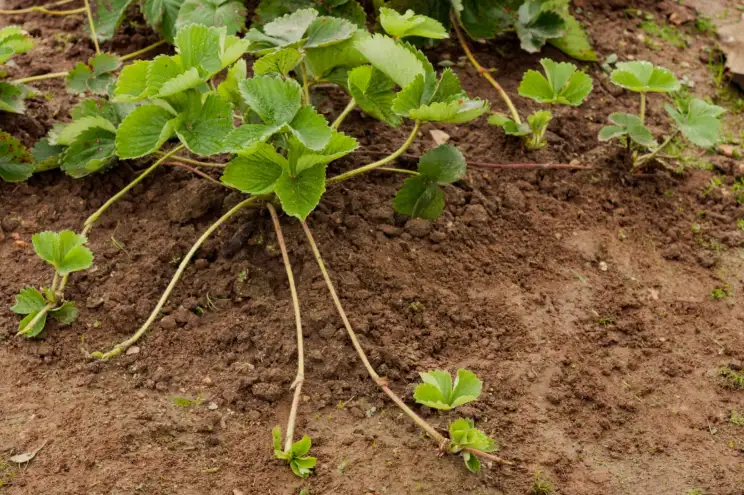
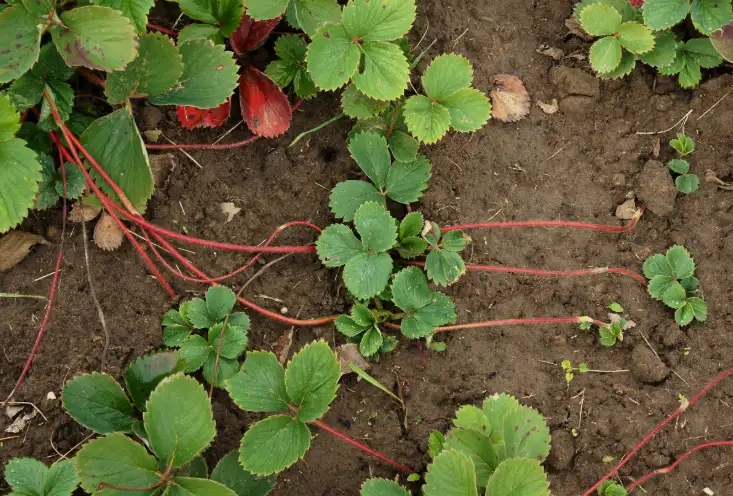
If you’ve grown strawberries for more than a season, you’ve watched this happen: long, wiry stems start creeping out from the base of the plant, reaching across the soil like curious fingers. At the end of each one, a tiny cluster of leaves forms — a daughter plant in the making. These are runners (also called stolons), and they’re your fastest, easiest route to expanding your strawberry patch for free.
The question most gardeners ask is: when exactly do I cut them? Not when they appear. Not the moment they root. There’s a sweet spot, and once you know what to look for, you’ll never miss it.
What is a strawberry runner, exactly?
A runner is a horizontal stem the mother plant sends out as a way of reproducing vegetatively — essentially cloning itself. Each runner can produce one or more daughter plants, which root into the soil at the nodes. Once rooted and established, these daughters can be separated and transplanted to grow as independent plants.
Unlike seed propagation, runners produce plants that are genetically identical to the parent. That means if you have a variety you love — productive, sweet, perfect for your climate — runners are the best way to multiply it.
The timing: when to cut strawberry runners
The short answer is: late summer to early autumn, roughly 4–6 weeks after the runner has rooted into the soil. But let’s unpack that a little, because the right moment depends on a few things happening together.
Early summer (June–July)
Runners begin to appear after fruiting. Pin them down to encourage rooting — don’t cut yet. The daughter plant needs time to develop its own roots.
Midsummer (July–August)
Daughter plants root into the soil. Growth visibly picks up. Still not time to cut — let the connection to the mother continue feeding the young plant.
Late summer (August–September) ✓
The daughter plant has 3–4 healthy leaves and a firm root system. This is your window. Sever the runner close to the daughter plant and transplant within a week or two.
Early autumn (September–October) ✓
Still a good time to cut and transplant, especially in warmer climates. Aim to get the new plants settled before the first frosts arrive so they can establish over winter.
How to know the daughter plant is ready

Look for at least 3 true leaves (not just the seed leaves), and gently tug the daughter plant. If there's resistance — if it feels anchored — the roots are developing well. If it pulls up easily, give it another week or two.
How to actually cut and transplant the runner
The process is satisfyingly simple. Here’s what to do once your daughter plant is ready:
Step 1 — Stop the runner from travelling further. Each runner can produce multiple daughter plants further along its length. To focus the plant’s energy, pinch off any growth beyond the first daughter plant you’re keeping.
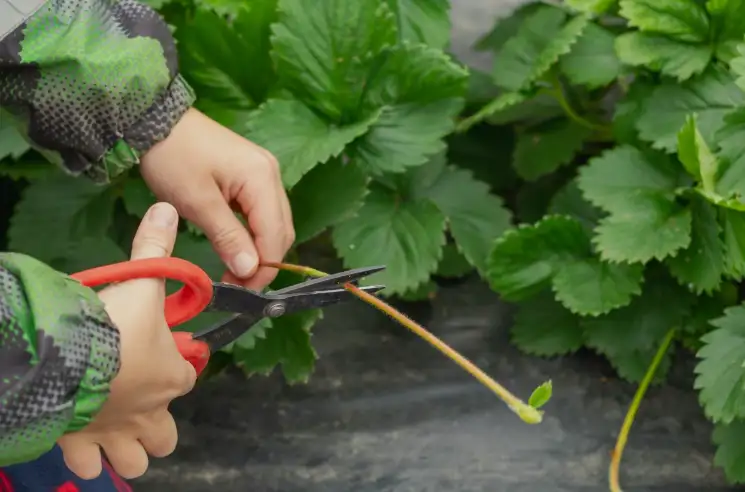
Step 2 — Sever the runner. Use clean, sharp scissors or secateurs to cut the runner close to the base of the daughter plant — about 2–3 cm from where it meets the soil. Leave a short stub rather than cutting flush.
Step 3 — Dig up the daughter plant carefully. If it’s been rooting directly in the bed, use a small trowel to lift it with as much root and surrounding soil as possible. Handle it gently — the root system is young.
Step 4 — Transplant promptly. Move the daughter plant to its new position (or a pot for later planting). Water it in well, keep the crown at soil level — not buried, not exposed — and give it a few days of gentle shade if the weather is hot.
Should you keep all the runners?
Not necessarily. Runners take energy from the mother plant — energy that could otherwise go into fruit production and root development. For a young mother plant in its first or second year, it’s often better to remove runners entirely in the first season, letting the plant put all its effort into establishing itself.
For a healthy, established plant in its second or third year, keeping 2–3 runners per plant is a reasonable balance. Any more than that and you’re spreading the mother plant thin without much gain.
Quick rule of thumb

If your main goal is maximum fruit this season — remove all runners as they appear. If your goal is to expand your patch — keep up to 3 per plant, and remove the rest.
What about runners that root in pots?
Many gardeners pin runners into small pots filled with potting compost, placing the pots alongside the mother plant. This is actually a great method — it gives the daughter plant a contained root zone and makes transplanting easy (no digging required). Once rooted, you simply cut the runner and move the pot where it’s needed.
This approach works especially well if you’re expanding into raised beds or container growing, where you want to control the soil and placement of each new plant.
Common questions
Can I cut strawberry runners in spring?

It's not ideal. Spring is when the mother plant is gearing up for flowering and fruiting — cutting and transplanting runners at this stage puts stress on both plants at an already demanding time. Wait until after fruiting, then take your runners in late summer.
My runner hasn't rooted. Can I still cut it?

You can, but the survival rate drops significantly. An unrooted runner cutting needs to be treated like a cutting — placed in moist compost and kept consistently humid until it develops roots. It's more work and less reliable than waiting for natural rooting to occur.
How many new plants can I get from one mother plant?

A healthy strawberry plant can produce anywhere from 2 to 5 usable runners in a season, depending on the variety and conditions. June-bearing varieties tend to produce more runners than everbearing types.
When should I replace my strawberry plants entirely?

Most strawberry plants decline in productivity after 3–4 years. A good practice is to start new plants from runners every year or two, so you always have young, vigorous plants coming through as the older ones are retired.
The bigger picture
There’s something quietly satisfying about propagating strawberries from runners. You’re not buying anything. You’re not starting from seed. You’re simply watching what the plant already wants to do — spread, replicate, persist — and giving it a little help. The mother plant offers you a daughter plant on a thread. Your job is just to know when to cut it.
Get the timing right, and in a season or two, you’ll have more strawberries than you know what to do with. Which, in a garden, is exactly the right problem to have.
Found this helpful? Browse more gentle guides to growing fruit and vegetables at zenofwatering.com — where the garden is always worth slowing down for.
SEO targets
When to cut strawberry runners, strawberry runner propagation, how to propagate strawberries, strawberry stolons, timing, cutting strawberry runners late summer, new strawberry plants from runners